Episode 129
Dark Fantasy, Black Authors, and a Toxic Hottie or Two with Cheryl Hodges of The Obsidian Archive
Episode # 129 Dark Fantasy, Black Authors, and a Toxic Hottie or Two with Cheryl Hodges of The Obsidian Archive
Part of noseyAF's 31 Days of Black Business series 🖤
She decided to write a book. Then figured she should probably start reading again. Then opened a bookstore.
Cheryl Hodges kept watching the girlies on Instagram open romance-only bookshops and realized nobody had built one for dark fantasy and speculative worlds. So she did, in January of this year, while writing her own novel, working a full-time job, and raising a kid. Indie authors and Black authors in the genre are the whole point.
What We Talk About
- What dark fantasy actually is, why Maleficent counts, and why all our millennial fantasy obsessions trace back to Disney
- How she decides which books to carry, what she's looking for in author submissions, and why she'll point you to a different bookstore if you're not a fit
- What indie authors are still fighting for against publishers with real marketing budgets
- The unexpected turn: her nonprofit plans are about literacy as comprehension, shaped by teaching her own son to read and by knowing a grown man who can't
If you love origin stories that don't skip the scary parts, this episode is for you.
Chapters:
- 00:10 - Celebrating Black Business Month
- 03:27 - The Journey to Opening a Bookstore
- 18:01 - The Struggle of Indie Authors in Today's Market
- 25:55 - Literacy Initiatives and Challenges
- 34:24 - Launching a Bookstore and Publishing House
- 38:44 - The Vision for the Future Bookstore
All about Cheryl Hodges
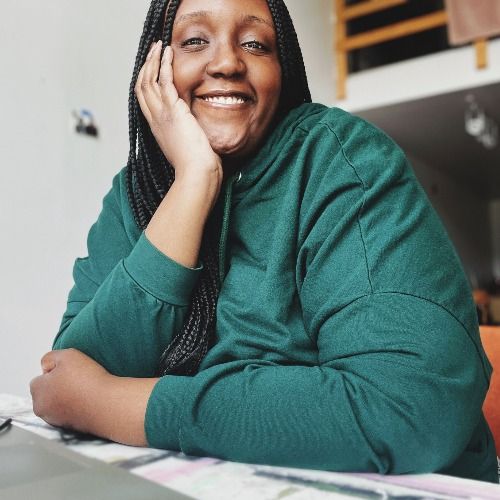
You're gonna love Cheryl — she's a Brooklyn library kid turned bookstore owner. Founder of The Obsidian Archive, an online bookstore for dark fantasy and speculative worlds, and author of Crown of the Morning Star, a dark mythic fantasy that follows Lucifer after the fall. She reads six books a month on her Kindle and listens to four or five more. Book two, a vampire duology following Lucifer's son Cain, drops at Halloween. Where she's headed: a brick and mortar with a cafe, a nonprofit running book drives and book clubs, and the biggest selection of indie titles she can build.
Things We Mentioned
- The Obsidian Archive → theobsidianarchive.org
- Crown of the Morning Star by Cheryl Hodges, available on Kindle and paperback
- Legendborn by Tracy Deonn, her beginner's guide to fantasy pick
- The Daggermouth pre-order campaign, and Lee Rivers
- Her banned books section, including Animal Farm and 1984
This series is supported by Off the Grid, a podcast for small business owners who want to leave social media without losing their clients. Find them at offthegrid.fun 🖤
Connect with Cheryl Hodges
- IG: @the_obsidian_archive_bookshop
- Website: theobsidianarchive.org
Stay Connected
📬 Get the noseyAF Dispatch → Subscribe here
🏡 Grab the Good Neighbor Playbook → Download it free
More ways to connect
- Email: stephanie@missgraham.com
- Follow on IG: @stephaniegraham
- Listen to more episodes: noseyaf.com
Support & Feedback
noseyAF is listener-supported; thank you for being here. 💛🫶🏾
📣 Share noseyAF with a friend who needs to hear this
Episode Credits
Produced, Hosted, and Edited by Stephanie Graham
Lyrics: Queen Lex
Instrumental: Freddie Bam Fam
Cover Art: Emma McGoldrick
Transcript
Hey, friends.
Cheryl Hodges:Welcome.
Stephanie Graham:And welcome back to noseyAF conversations about art, activism, and social change. I'm your host and your friend, Stephanie Graham. And it is August, which means it is Black Business Month.
And this is something new to the podcast and in order to celebrate Black Business Month. Because when I found out about it, I'm like, what? I thought that it would be great to talk to a black business owner every single day of this month.
And so today's guest decided to write a book. But then she realized, well, before I write a book, maybe I should get back into reading. So that was her first step.
And then somewhere in between this whole reading journey, our guest, Cheryl Hodges decided to open a bookstore, too. So Cheryl Hodges is the founder of the Obsidian Archive, which is an online bookshop for sci fi and dark fantasy readers. Cheryl is off.
Stephanie Graham:Is also.
Stephanie Graham:Also the author of the Crown of the Morning Star. And you know what, guys? I am calling all of the dark academia energy and indie author folks to the front and center, because you know what?
Cheryl is your girl. I'm so excited for you to hear this conversation with her. But first we have to play our theme music, and then we'll get to talk to Cheryl.
So welcome, welcome, welcome, welcome to nosey af.
Stephanie Graham:Gotta get up, get up to the whole world. You will win a winner Vision of a star with a mission in the cause. What you doing? How you doing?
Stephanie Graham:What you're doing and who you are?
Cheryl Hodges:Flex yourself and press yourself Check yourself, don't wreck yourself if you know me then you know that I'll be knowing what's up. Hey, Stephanie Graham is nosey .
Stephanie Graham:Cheryl. Welcome to nosey af.
Cheryl Hodges:Hey, thank you for having me.
Stephanie Graham:Yeah. I am so excited to speak to you because you open the Obsidian Archive Bookshop online, which already the website is totally a world of its own.
And I'm just so curious, like, what was the exact moment you said, I'm going to, like, really build, build this bookstore?
Cheryl Hodges:So I started writing a book. And I used to be a big reader when I was a kid. Like, I'm from New York. We lived in Brooklyn. We used to go to the Brooklyn library every Saturday.
My mama did not play those games. Okay? So we went to the library every Saturday, and, you know, life gets in the way. And I kind of stopped reading.
And I was like, I'm gonna write a book. And so I started writing, and I was talking to a friend, and I was like, I should probably start reading books.
And she was like, yeah, that would be helpful. I started reading all these books, and then you get into book talk and you get into book threads and the book community.
And I just kept seeing all of these people open these bookstores.
Stephanie Graham:Okay.
Cheryl Hodges:And you know, romance only or horror or this or that. And I'm writing a fantasy book and I'm like, they don't have fantasy specific bookstores. You know, it's like, that's not really a thing.
And I was like, you know what? If they could do it, I could do it too.
Stephanie Graham:Yeah.
Cheryl Hodges:I'm open a bookstore and I was like, I'll start off online and then at some point grow into having a brick and mortar. So I'm still working out the brick and mortar thing because now my goals have kind of shifted. So I'm going to shift more into a pop up. Okay.
Instead of having like a set brick and mortar, we'll do pop ups and markets and festivals and stuff like that. But I just was like, you know, if everybody else could do it, you know, if they could do it, I could do it too. So.
Stephanie Graham:Yeah, I didn't even know that there were bookstores that were like in specific genres like that.
Cheryl Hodges:Yes. Especially romance is very heavy right now. Romance is a big driver for publishing right now. And so romance only. And it don't matter.
Contemporary, urban, dark, like romance only bookstores exist. And I was like, they don't have sci fi and fantasy bookstores. And I want to do that.
Stephanie Graham:Yeah. What was it about fantasy that got you into fantasy? Was there a certain book that like sparked that for you?
Cheryl Hodges:No, I mean, I started. So my book is a dark fantasy.
Stephanie Graham:Okay, what's, what is dark fantasy?
Cheryl Hodges:Dark fantasy is fantasy that has characters that, you know, it highlights. Really. The villain, you know, the heroes are anti heroes. They're morally gray. They bend the rules. So dark fantasy is stories.
And then it can even be stories where you have a lot of paranormal, mythical. Just characters that aren't all love and light.
Stephanie Graham:Yeah. Like Maleficent on Disney.
Cheryl Hodges:Yes.
Stephanie Graham:Yes.
Cheryl Hodges:She is totally dark fantasy. Okay. The Descendants or something. I think that would, to me that would be considered like a darker fantasy.
Stephanie Graham:Yeah. Okay. I can get behind that. When I saw Maleficent, I was like, oh, well, that prince, he asked for it. Like, don't start none, won't be none.
Cheryl Hodges:Don't do that. Like, how dare you, like how dare you cut off that girl's wings like that.
Stephanie Graham:Right? Yeah. If she came up and she said, oh, really? In this show, baby boom.
Cheryl Hodges:Okay.
Stephanie Graham:Like that was so smooth.
Cheryl Hodges:Exactly. So I'm like, that is, that's definitely dark fantasy.
Stephanie Graham:Now that I know about dark fantasy. What does dark mean to you? Aesthetically, emotionally? Like, you know, past just a genre label.
Cheryl Hodges:For me, when I'm thinking of one day opening, you know, brick and mortar, even designing like, you know, like my aesthetic for pop ups and stuff, Dark to me is kind of gothic. It's darker, richer colors. It's, you know, blacks and, you know, accents that pop so rich. Royal blues and emeralds and purples and golds.
That to me is like a darker, like what people would call dark academia. So like very rich colors, like rich woods and blacks and obsidian and those kind of things. So aesthetically that's, that's what dark is to me.
Stephanie Graham:Yeah. And what kind of stories do you feel like people underestimate or dismiss too quickly in this genre?
Cheryl Hodges:Well, for one story is written by black authors. I feel like black authors are very underrepresented in the fantasy space and they aren't really taken as seriously.
You know, people love stories with witches and the fae and that's all really popular.
But like, even things where it's just different types of magic systems, different types of languages, different worlds, I think stories written by black authors are just not taking it seriously.
Stephanie Graham:Yeah. Is there like a whole world that we just don't know of black authors writing in the genre?
Cheryl Hodges:Yes, there's a lot more black fantasy authors now from what I can tell. And that's just from me being on like book threads and Bookstagram and things like that.
Like, I didn't even know all of this stuff existed until I started reading, you know, because booktok will popularize all of these, you know, white authors and their books. And some of their books are good and then some are like really just whatever.
It's like, oh, I can take it or leave it, but there are some black authors out there really crushing it, and they just don't get the traction and the hype that they deserve because they're black and a lot of their characters are black. Yeah. And so, you know, people think, oh, you got black people using, you know, different types of terminology in your books. Well, they still black.
Like,.
Stephanie Graham:Is the bookstore just black authors or do you have everybody in the genre?
Cheryl Hodges:I have a wide range. I just decided in January I was gonna open this bookstore I'm reading and like trying to plan.
And there's so many authors that I haven't discovered yet. But one of my goals is to highlight black authors.
So I do want to, when I open up taking author submissions, I do want to pull in more black indie authors and even More prominent black authors. I'll have to diversify some of my genres. Right now.
I don't really have a lot of dark romance, and, you know, a lot of us do write dark fantasy, and it has romance in it because romance is so popular. So it's like, those are genres that kind of have to add in. But I do want that to be a highlight of things that I sell. Yeah.
Stephanie Graham:Just a curious question. Is romance just like a love story? I feel like when people say romance, it takes it, like, an extra level of passion.
I see Fabio, like, taking this woman. I don't know if there's, like, a black version of Fabio, but that's who comes to mind.
And that's just not like, a regular, like, oh, I like you at the ice cream store. So, like, is romance like, a whole other level? I'm not a big reader, so romance.
Cheryl Hodges:Romance is any type. And I had to look this up because I have been reading a lot of books, and there ain't no. When you think romance, you think dates and flowers.
Stephanie Graham:Yes, exactly.
Cheryl Hodges:And there is some like that. But dark romance is not that. Like, it's obsession. It's someone falling in love with someone. And it may be unrequited.
It might be, you know, very morally toxic. Gray man falling in love with some woman who's beautiful and kind of corrupting her, but her falling in love with him. So romance can be anything.
It could be, you know, it could be the cutesy meet cute dates and all those and flowers, and he sweeps her off her feet. And it could also be like, he kidnaps her. She falls in love with him, you know, so.
Or he kills her whole family because she was abused, and you're just like, what?
Stephanie Graham:Yeah, like, how dare you? But you find. But you find the.
Cheryl Hodges:That's really. If the. If the male main character is fine or attractive, a lot of things, like, go out the window. Wow. Oh, my goodness.
Stephanie Graham:Like Beauty and the Beast sort of.
Cheryl Hodges:Yes. There are a lot of Beauty and the Beast retellings right now.
Stephanie Graham:Okay. That's wild. I don't know why I keep, like, going back to all these Disney references for.
Cheryl Hodges:As millennials and stuff. I think that's where our obsession with fantasy started. You know, Cinderella, Beauty and the Beast, like, Sleeping Beauty, all of those things.
They really kicked it off for us.
Stephanie Graham:Yeah. You know, speaking of romance, you did mention, you know, romance only bookstores pop up online, and that sort of inspired you with noticing a need.
What did you feel was missing for readers in this whole wave? Like, how do you Move from inspiration into, I should build my own version of this.
Cheryl Hodges:I feel like what was missing was independent bookstores that really take into consideration what people want to read outside of what's on booktok, you know, really taking into consideration, yes, you can have the popular books. Yes, you can have what everyone's reading, but what else is out there?
I included now a section for banned books, so, like, to explore Animal Farm and even trying to add in more books that, you know, highlight stories that people wouldn't necessarily read. And so I think that's what a lot of bookstores were missing.
And that was kind of what I was thinking, was having stories that people may want to read. They just don't even know they exist.
Stephanie Graham:Yeah.
Cheryl Hodges:And me even discovering these stories as I'm searching for inventory.
Stephanie Graham:Any suggestions of, like, a Beginner's Guide to a Fantasy?
Cheryl Hodges:Like, a book to check out, I would say. Tracy Dion has a series, Legendborn.
Stephanie Graham:Okay.
Cheryl Hodges:And it's got. It's like an Arthurian retelling. And it's black character. She's a black author. I'm actually. I just started it, and it's really good. So.
Stephanie Graham:Okay. Okay. Thank you for that. Yeah, I'm gonna have to check that out. I told myself I need. I mean, I've always.
I've been telling myself for years I need to read more, and very rarely listen.
Cheryl Hodges:You know what? Audiobooks count as reading, and so people like to discount. Oh, well, you listen to that book, that's okay.
I listen to, like, four or five books a month. Yeah, it counts as reading because you're still reading is just digesting stories.
And it doesn't matter how you get the story, whether you listen to it, somebody reads it to you, or you read it on a Kindle or paperback or hardcover. Like, audiobooks still count. So when I'm in the car, I'm listening to an audiobook, typically. Okay.
Stephanie Graham:Yeah. I was going to ask, like, how do you manage to read four to five books a month? I mean, I know people do that a week.
Cheryl Hodges:I read, like, six books a month.
Stephanie Graham:Wow.
Cheryl Hodges:On my Kindle. Yeah.
Stephanie Graham:You're, like, consumed in books, basically.
Cheryl Hodges:Writing books, selling books, reading books, listening to books. Yeah.
Stephanie Graham:So you being an author, this, like, adds a whole other level to all of this. How does being a writer shape how you curate books for your shop?
Cheryl Hodges:For me, it makes me want to be more intentional on what am I reading? And then what would other people be interested in reading? And it helps me to be more diligent. Like, when I'm.
I Get a lot of author submissions all the time. And I read their blurbs. I read, I go and I look their books up online. I'm looking up what kind of reviews they're getting.
Some of their books I download on Kindle and kind of skim through. You know, it makes me be more intentional on what I'm putting in the bookstore because I don't want to have the same books that everybody has.
Yeah, like everybody and their mama has, you know, dystopian or, you know, whatever. I want to have things that you may not necessarily find. Mm.
Stephanie Graham:Interesting. So if there's like an independent author who's sort of everywhere, would you, like, how do you decide if you. Yes.
Cheryl Hodges:Also will carry that?
Stephanie Graham:Or if you're like, well, they have too much exposure, I'm gonna bypass it because it could bring income for your shop.
Cheryl Hodges:That's true. And so sometimes I do. Like, I did the Daggermouth pre order campaign for the indie publishers, and another one that I recently did was Lee Rivers.
She was. So she was indie published and then she got trad published and she has more dark romance. And I did her pre order campaigns too.
And it does bring revenue, but it also brings exposure because those same people, while they're looking for that book, they're also skimming these categories and they're like, ooh, look at this. Or oh, I've never heard of this. And they're reading descriptions. Yeah, for me, it's.
Does this book category in the genre kind of align with the store? Like, I'm not gonna pick a black author who does Western romance or contemporary or horror, because I don't have a whole lot of horror.
Yeah, but if there's something dystopian about it or there's a magic system or it's got like, you know, fae or, you know, demons or something, it's like, oh, okay. That I have a category that might fit in, you know, and then I kind of promote it and see what kind of traction it gets and go from there.
Stephanie Graham:The name Obsidian Archive already feels like a world. So when somebody stumbles or, you know, goes to your website, what is it that you want them to feel being there?
Cheryl Hodges:I want them to feel like they have stepped into, like, something catered to their interests. I want it to feel kind of dark and gothic. Y. I want it to feel dark Academia. Ish.
You know, But I still want them to feel like they can find everything. They discover new things. You know, I do have. I have bookish merch. I got books. I got tea samples and Things like that.
Because I wanted to, you know, with the thinking of a brick and mortar. I want to have a cafe.
Stephanie Graham:Yeah.
Cheryl Hodges:I want people to feel like they've stepped into a place where they can get a little bit of everything, something to ground their nervous system with these tea blends. You know, a good book to read when it's rainy.
You know, even a couple of good bookmarks for all the endless lists of books I got sitting on their side table.
Stephanie Graham:You know, you're intentionally building toward a large selection of indie titles. What do you think indie authors are still fighting for in the publishing ecosystem?
Cheryl Hodges:Space? Still fighting for recognition. They're still fighting for marketability in a world that pushes certain books all the time.
You know, the thing about big publishers and these imprints that they create is they have these large marketing budgets. Yeah. They can take up book talk space and they can pay these influencers.
And indie authors are really fighting against that because you'll pull up six book talkers profiles and they all talking about the same five or six books.
Stephanie Graham:Yeah.
Cheryl Hodges:Or.
Whereas indie authors have to spend so much money trying to market or hire PR company, so they're really fighting to get space and market share in the book talk and in the books community.
Stephanie Graham:Yeah. That's tough.
Cheryl Hodges:It is.
Stephanie Graham:It makes me want to have a bookstore and I have no idea what I'm doing.
Cheryl Hodges:I. Look, I don't have no idea what I'm doing. Yeah, I'm just doing it. I just. I did a lot of research and here we are.
Stephanie Graham:Yeah. How do you decide, you know, what books you will carry?
You say that you get, you know, a bunch of book submissions, you know, for authors that are listening to this, you know, that might say that they're going to pitch you or have already pitched you. How do you know if it's a yes or a no?
Cheryl Hodges:And do you.
Stephanie Graham:And do you resend and do you send rejection letters?
Cheryl Hodges:I haven't sent a whole lot of rejections, but there's just people I have not reached out to fully. I've seen a few in the beginning when I first opened. For me, is the book a good fit?
As someone who writes in fantasy and who reads fantasy, running a fantasy bookstore, does this book fit into what I'm already selling? I read the reviews, you know, some of them. Like I said, I've read their books. You know, there were a couple.
I read their books and I was just like, I can't carry this for various reasons. Maybe it's not necessarily the story, but I want people to. It's a catch 22 because it's like, I want to carry your book. I do.
But is your book sellable also? Is it ready to be sold? Has it been edited? Has it been formatted?
Is it like, would people pick this book up or buy this book from me and say, you know what I hate? I bought this book. It's a terrible book. And then leave me a review instead of leaving you a review.
You know, for me it's, you know, is this a decent book? Like, for me, reviews are very important. I go to Goodreads and I go to Amazon if everyone is saying the same thing.
I typically don't really want to carry a book and this is going to sound really bad, but I don't really want to carry a book that doesn't have at least four stars.
Stephanie Graham:Okay?
Cheryl Hodges:That's just because if it has anything like three stars or two and a half stars, that means everyone read this book and they had similar thoughts about it. And I'll read, I'll go through every single review, you know, but if a book is at least four stars, that means that people really liked the book.
Maybe it wasn't their favorite book and that's why it's not five stars. Yeah, at least four stars. It means the book is a good book. You know, you're gonna have your three and two star reviews in there every now and again.
But if it's at least rated 4.1 stars, I'll. But anything less than that is gonna be, it's gonna be like maybe not right now. Yeah, yeah. Weeks later.
Maybe you need to go back and format or edit or review your story. I don't know. Like.
Stephanie Graham:Yeah, and it seems like you do need to look at the breadth of like the full collection of what you are carrying and then like sort of self assess. I know this happens, you know, as an artist with galleries.
You know, an artist wants to have a gallery, you look at what artists they represent and like, if you can see yourself in that crew, then like, maybe you might have a chance. But like, if you don't see, you know, the theme sort of aligning, then it's just not going to be a good fit.
So it sounds like the same thing applies for bookstores.
Cheryl Hodges:Agreed. Yes.
Stephanie Graham:Yeah. Yeah. What's. What's it like being like a gatekeeper? You know, like, I mean, you've had this business since January, you know, it's August now.
You know it's August when this episode releases. Yeah. What's that like?
Cheryl Hodges:It's, it's interesting because Yeah, I get people wanting me to carry their book all the time. I get random submissions all the time. I get people tagging me in posts, and, you know, I have to really review what it is that they're promoting.
And then sometimes I can recommend them to another bookstore, you know, and as a bookstore owner, I follow a lot of bookshops online.
Stephanie Graham:Yeah.
Cheryl Hodges:You know, because if it's something that I don't carry, I can at least recommend someone else. You know, Like, I get tags for dark romance or monster romance, and I'm like, oh, thank you for thinking of me.
Not quite my genre, but here's another bookstore that might be a better fit.
So it's like, for me, it's about just aligning myself properly with things that make the most sense for my store, you know, even with it just being online. But if I had a brick and mortar, I would do the same, you know, so.
And I think authors should just consider, like, you don't necessarily want everyone to carry your books. Like your books. You want your books to be carried by stores. They align because otherwise they go on a shelf somewhere and no one is talking about it.
They're not thinking about it. The store's not promoting it. Like, it's just on a shelf. And people hope that when they walk in, they buy it, otherwise no one's thinking about it.
So it's like you. I always. I want people to understand, like, you want your books aligned with the places that you want them sold.
Stephanie Graham:Yeah, that makes a lot of sense. You are, like, working towards having a not for profit around book drives, book clubs, and literacy.
You know, does literacy mean anything else to you besides just, hey, kid, read this book. Hey, lady, read this book.
Cheryl Hodges:Hey.
Stephanie Graham:Hey, fella, read this book?
Cheryl Hodges:Yes. For me, literacy is comprehension. And comprehension extends to all facets of your life.
Stephanie Graham:Yeah.
Cheryl Hodges:And I notice as a reader when people don't read, and I say that because, like, their comprehension levels just aren't up to where they might be for their age. And we all know the literacy rate. Literacy rates are down. And what a better time to get people into reading when there are so many books to be read.
People are writing new books. I saw a stat that said Amazon gets 8,000 author submissions every single day.
Stephanie Graham:I believe it. That's insane. That's wild.
Cheryl Hodges:Wow. Millions of wow on Kindle. Millions. Like, there's no to promote literacy than right now. And there's more opportunities for access.
And for me, I want to start. And I'm also a special needs mom.
Stephanie Graham:Okay.
Cheryl Hodges:And as a mom, of a kid with autism. Autistic people are geniuses in their own way.
But a lot of them, when they have speech delays, it can be harder for them to pick up on things like learning to read.
And for me teaching my son to read and then talking to his teachers and, you know, learning about other kids in his class, it was just like, this is a thing. And then talking to adults, like I said, who don't read and see comprehension levels.
I actually know someone who is older and he does not know how to read. And I just thought to myself, there's obviously a need for it.
I wanna start with doing things like book fairs and book festivals where the books are almost free. And we have sponsorships and partnerships with publishers or corporations that wanna sponsor these books and authors that wanna put.
Authors of YA or middle grade or kids books that wanna put their books in the hands of children. And then at some point, partnering with people who can teach people to read. Private lessons.
I wanna do book clubs and schools, middle schools, like I wanna do. And like, every time I think of it, I think of a new idea, But I'm like, I wanna have an app and a website, all these things.
I want people to feel comfortable reading.
Stephanie Graham:Sure.
Cheryl Hodges:And there's been some discourse lately on. Even on book threads about somebody posted like, you know, maybe authors shouldn't use such big words in their books.
And a lot of the authors were kind of like, but that's what you have dictionaries for. The dictionary is a book. You have, what a great time to be alive. You have so many ways to learn new things and access to so many things.
But you want us to tone down our language so that it's easier for you when you have a phone that you could Google. Yeah, the Indian. And so it's like, if literacy rates come up, comprehension rates come up.
Stephanie Graham:Yeah.
Cheryl Hodges:And it'll still be challenging for some people, but it just gives us all more opportunities, you know, it makes me.
Stephanie Graham:Think, like, with reading to kids, is that a good. Is that good for literacy, or should they be reading to us? I'm never around kids, but. Oh, okay.
Cheryl Hodges:Both. Like, my son makes me read the same two books to him every night. Okay.
And then sometimes I'm like, I lay across the bed, I'm like, no, it's your turn. You can, you know, and he can read it.
Stephanie Graham:That's really cute.
Cheryl Hodges:And it's like, this just fosters. Today is these two books, but next week it might be two different books, you know, Or a week, a month later, we might have Two new books.
So it's like he asked to go to the library. We go to the library, we check out books, we look at books. So it's like, I want him to get into the habit of.
Of wanting to read or be read to, because today it's being read, too. But when he's 16, it could be him reading to other kids, you know, something different.
So either way, as long as there's a book in somebody's hand and somebody is reading something I love, like your.
Stephanie Graham:Big ideas and dreaming of, you know, what all we should have in terms of just, like, literacy and comprehension and books, you know, you're building something, you know, with the bookstore and, you know, eventually as a brick and mortar store. What's been the hardest part, you know, especially holding this whole vision, like, in real time.
Cheryl Hodges:The hardest part for me is capital and time, because I'm still employed. I'm still somebody's mama. I'm still. I just. My book is now published, and so that's less work. But I'm already working on book two.
Stephanie Graham:Yeah.
Cheryl Hodges:Trying to launch a publishing house, and I want to launch a small press. So it's like, okay, a bookstore, a press, a nonprofit. I like to do things in what would be, like, an ecosystem, so everything kind of flows together.
But, yeah, everything costs money. Yeah, it costs money. I want to hire a marketing person. That's going to cost me money.
Stephanie Graham:Yeah.
Cheryl Hodges:To start with, you know, setting up these book fairs and getting my nonprofit. It's. I got to get all my stuff registered with the state. I got to do all the. All of that stuff costs money.
So capital, as a woman of founder, as a black woman founder, is the thing. Like, that's where that's the hardest challenge. On top of finding the time to do everything.
Stephanie Graham:Yeah. You know, you have to tell us about your book. Like, I want to talk about, like, more capital, but hold up.
I didn't realize that your book was published, and you have to tell us.
Cheryl Hodges:About it, so I wrote Crown of the Morningstar.
Stephanie Graham:Okay.
Cheryl Hodges:And it's a dark, mythic fantasy, romantic y. You know, I didn't even mean for it to be a romantic scene. It just happened.
Stephanie Graham:Is there a toxic hottie in this book? It is.
Cheryl Hodges:Oh, here we go. Yeah. And it's got black supernatural. So my book follows Lucifer after the fall.
It reimagines the fall and his fall from heaven, and then what it's like for him to build a kingdom in hell from the ashes, you know, fighting rebellions and wars and going through loyalty. But in the end, he wants the same thing we all want. He wants love. And it just follows his journey over the course of, like, 2,000 years or so. Wow.
So, yeah, it's a hefty book.
Stephanie Graham:Okay. If I have this hefty book, what would my pastor say? Because I'm sort of thinking, Lucifer, why.
Cheryl Hodges:You do all that, and all you want is love? I. Honestly, as someone who grew up in the church. Yeah. I feel like it's just one. It's.
You know, it's fantasy, but it's just a different perspective because the book is written from Lucifer's perspective. Okay. You see him interact with angels and Elohim and all of those things. Like, you see these things, and it's. You know, it's. It's interesting.
I like it. I've gotten good reviews on it. Yeah.
Stephanie Graham:I'm really interested in.
Cheryl Hodges:Just. It came to me in a dream, and I was just like, oh, this is interesting.
Stephanie Graham:Yeah.
Cheryl Hodges:I just started writing, and then I just couldn't stop.
Stephanie Graham:Yeah.
Cheryl Hodges:So.
Stephanie Graham:And now you're working on book two. Is it gonna be. Can you tell us what that one's about or. Not yet.
Cheryl Hodges:Book two is about Lucifer's son, Cain, that he had with Eve, and it's a vampire fantasy, and it follows Cain as he struggles through this curse. He's cursed, and the curse basically turns him into a vampire.
And it watches him struggle with his mortality and trying to remain human while this curse kind of manifests in his life. And so it's gonna be a duology. Cause my first book was, like, really long.
Stephanie Graham:Okay.
Cheryl Hodges:And this book might be kind of long, so I'm gonna split it into two books. But it will come out as a complete duology at Halloween. Wow.
Stephanie Graham:Okay. And then can these books. Are they physical books, or can we also listen to them?
Cheryl Hodges:No, I don't have audiobooks yet.
Stephanie Graham:Okay. Okay.
Cheryl Hodges:They are Kindle and paperback.
Stephanie Graham:What? And maybe you sort of touched on this, but what are you learning about the gap between this big, beautiful idea and being.
Having, like, a financially sustainable bookstore?
Cheryl Hodges:I'm learning that I probably should have planned a little bit more.
Stephanie Graham:Okay.
Cheryl Hodges:Because I'm really the type of person, like, once I get an idea and I decide something, I'm gonna just do it.
Stephanie Graham:I get that.
Cheryl Hodges:And it takes a lot of planning. Not, I think, as much as you would think, but, like, it just. It takes planning. It takes planning. And opening the bookstore was. It was a good idea.
And I'm glad I opened it when I did, because I opened it as early as I Did because I got on with the Daggermouth pre order campaign. And so that drove my reasoning for opening it. But it's just taking it from idea to fruition. It's work. You know what I'm saying?
It's work and it's time and it's money.
Stephanie Graham:And.
Cheryl Hodges:I just. I probably could have planned more.
Stephanie Graham:Yeah, I think. I think I totally missed how much it takes to actually plan something. Like, I think that, oh, if I just write down my tasks for the day, that.
That's planning. And it's like, no. If I actually sit down, I'm like, wow, this is going on and on. I've been sitting here for like six hours planning out this stuff.
And it's so frustrating and it's annoying.
Cheryl Hodges:You gotta plan for the first six months. The first year. Yeah, you're gonna have two years. Where do you wanna see yourself in three years?
Like, and I'm a planner, but I'm really like, oh, let's just do it. Right. You know what happens.
Stephanie Graham:Yeah. You've. You've been talking about, like, book talk and, like, threads.
A lot of social media has seemed to sort of helped, you know, birth your bookstore.
Cheryl Hodges:Yeah.
Stephanie Graham:What do you think would have happened if, you know, there is no social media? Would this have still come about?
Cheryl Hodges:Maybe.
Stephanie Graham:Okay.
Cheryl Hodges:Social media has really enhanced your ability to market yourself and to reach a wider audience. You know, being an online bookstore, I can ship books across the country. Across the world.
Stephanie Graham:Yeah.
Cheryl Hodges:If there wasn't that access, my audience would be a lot smaller, but I still would have done it in some capacity. I probably would have done a brick and mortar. But I used to do real estate, so I'll find a creative way to market.
Like, I'll do postcards, I'll do letters, I'll do flyers. You know, so, like handwritten letters or.
Stephanie Graham:Can you talk a little bit about a marketing strategy around letters?
Cheryl Hodges:So when I used to do real estate, I would pull people's addresses from the Internet and I would send them mailers. And it might be like a generic. Here's the information around the neighborhood in your area. Or here's what home sales and your zip code are going for.
Stephanie Graham:Yeah.
Cheryl Hodges:Typed. And I might sign them, you know, the envelopes. But yeah, that. Or like postcards or something like that.
Stephanie Graham:Yeah. Okay. That's just a great idea. You know, I feel like you always get. Speaking of real estate, there was.
Cheryl Hodges:Bravo had.
Stephanie Graham:I think it was Million dollar Listing. It was just like a reality. Yes. I love that show. I don't know if you remember this.
But they, you know, like, a group of three of the realtors, they did go door to door, like, putting their business cards. And I'm like. And then somebody did say. Somebody did say, actually, you know, we are thinking about putting this house up.
Cheryl Hodges:And they just walked in and they.
Stephanie Graham:Took and gave, like, an assessment, and I'm like, wow. Door to door.
Cheryl Hodges:Yeah, that.
Stephanie Graham:That definitely worked.
Cheryl Hodges:It does, yeah. Yes. I used to do. I was a queen of postcards, and people would call me all the. Like, I would just pull.
I had a friend who was like, my assistant, and I would be like, go on Google and I would give her a map and find every address in this circle. Interesting. And give me their address so that I could send them mailers.
Stephanie Graham:Okay.
Cheryl Hodges:That's a really. I love that.
Stephanie Graham:Thank you for sharing that.
Cheryl Hodges:And I feel like you can do stuff like that for any business.
Stephanie Graham:Yeah, yeah, for sure. Because I feel like, even, like, with your bookstore, like, when the brick and mortar comes, you could say, hey, knock, knock. I'm here in the area.
Just letting you guys know, here's a flyer and keep it moving. Yeah.
Cheryl Hodges:Basically, he'll be like, oh, okay.
Stephanie Graham:Yeah. You know, if everything goes how you want it to, what does the Obsidian Archive look like in five years?
Cheryl Hodges:So I'm moving to Los Angeles. Okay. Yeah. And it looks.
Stephanie Graham:Where are you currently based right now?
Cheryl Hodges:Phoenix.
Stephanie Graham:Phoenix. Okay. Okay.
Cheryl Hodges:Currently in Phoenix, I'll be moving to Los Angeles to go to film school. Me. It looks like a bookstore on a cute little street. You know, same theme that I've always wanted. Dark, gothic, you know, cafe events.
I want to have, you know, book events. I want to do workshops, teaching people how to learn asl, so American Sign Language. Because that's something I've been wanting to do.
Stephanie Graham:Yeah.
Cheryl Hodges:There's a big Spanish community in most cities, and I'm like, how nice would it be to have classes to teach them how to learn English? Yeah. I also have friends who work in disability and accessibility. And I'm like, at some point in a brick and mortar, I want large font books.
I want books in Braille. I want people to come into my future bookstore at an event.
Maybe it's an author signing or something, and everyone feels like there's something there for them.
Stephanie Graham:Yeah.
Cheryl Hodges:Except kids, because I ain't carry no kids books. But we got adults.
Stephanie Graham:Keep your kids at home, guys.
Cheryl Hodges:We'll still do, like, the book fairs in the literacy, but, yeah, I have, you know, books that I want to encourage adults to read a book. And you can read any type of book you want, like.
Stephanie Graham:Yeah.
Cheryl Hodges:You know what I'm saying?
But for me, five years from now, I could totally see myself with a brick and mortar somewhere in Los Angeles, just with a cute little cafe in it, hosting events.
Stephanie Graham:Yeah, I love that. I love this, you know, fantasy bookstore turned community resource center for adults. Yeah, I love that so much.
Cheryl Hodges:And it's gonna happen.
Stephanie Graham:I believe it's gonna happen.
Cheryl Hodges:Oh, yes. Listen, once I set my mind to something, that's it.
Stephanie Graham:Yeah, Clearly. Clearly.
Cheryl Hodges:I've already decided, like, online bookstore is just the foundation. It sets the records for the sales and what are people interested in and what do people wanna read.
And then the brick and mortar is like just the manifest, the physical manifestation of it.
Stephanie Graham:Yeah. This has been such a lovely, lovely conversation.
Cheryl, anything else that we need to know about you or the Obsidian Archive before we call it complete? How can we support you?
Cheryl Hodges:Well, you can support us by shopping online.
Stephanie Graham:Yes.
Cheryl Hodges:Follow us on Instagram threads. I was trying to get on TikTok. I just can't do it.
Stephanie Graham:Me neither.
Cheryl Hodges:Just can't do it. But Instagram and Facebook. You can find us on Instagram and Facebook.
The website is theobsidianarchive.org Like I said, I'm working on expanding, you know, the books that we have by this fall. So cool. You know, check it out, see what you find.
Stephanie Graham:I love it. Thank you so much for talking with me today and talking to us, talking to the nosey F community. I appreciate it.
Cheryl Hodges:Thank you for having me.
Stephanie Graham:That concludes another episode of nosy AF, 31 Days of Black Business. I'm your host and friend, Stephanie Graham. I hope you took something away from today's conversation and had a good time hanging with us.
Be sure to check out the show notes to learn more about today's guest and consider supporting their work. You know how it goes, whether you're making a purchase, hiring them or simply spreading the word. Listen, who doesn't love a referral?
It truly all makes the difference. Quick thank yous go out to Queen Lex and Freddie. Bam Bam for the nosy AF theme music.
And Emma McGoldrick, who hooked me up with the COVID art and branding. Shout out to the partners and supporters for this series. You could check them out in the show notes as well. Super grateful for a partner. Hello.
That's the show Friends until tomorrow. Stay curious and take care.
Cheryl Hodges:Bye, Sam.